Bali Natural Stone Guide
Guide to natural stone from Bali: the types, the uses, and what to know before you order
By Sasha, ExportBali Sourcing Agency. Updated August 2026
Bali’s volcanic geology has produced some of the world’s most distinctive natural stone, and a stone carving and processing tradition that goes back centuries. If you’re sourcing stone from Bali for the first time, this guide gives you the grounding you need to make good decisions and ask the right questions.
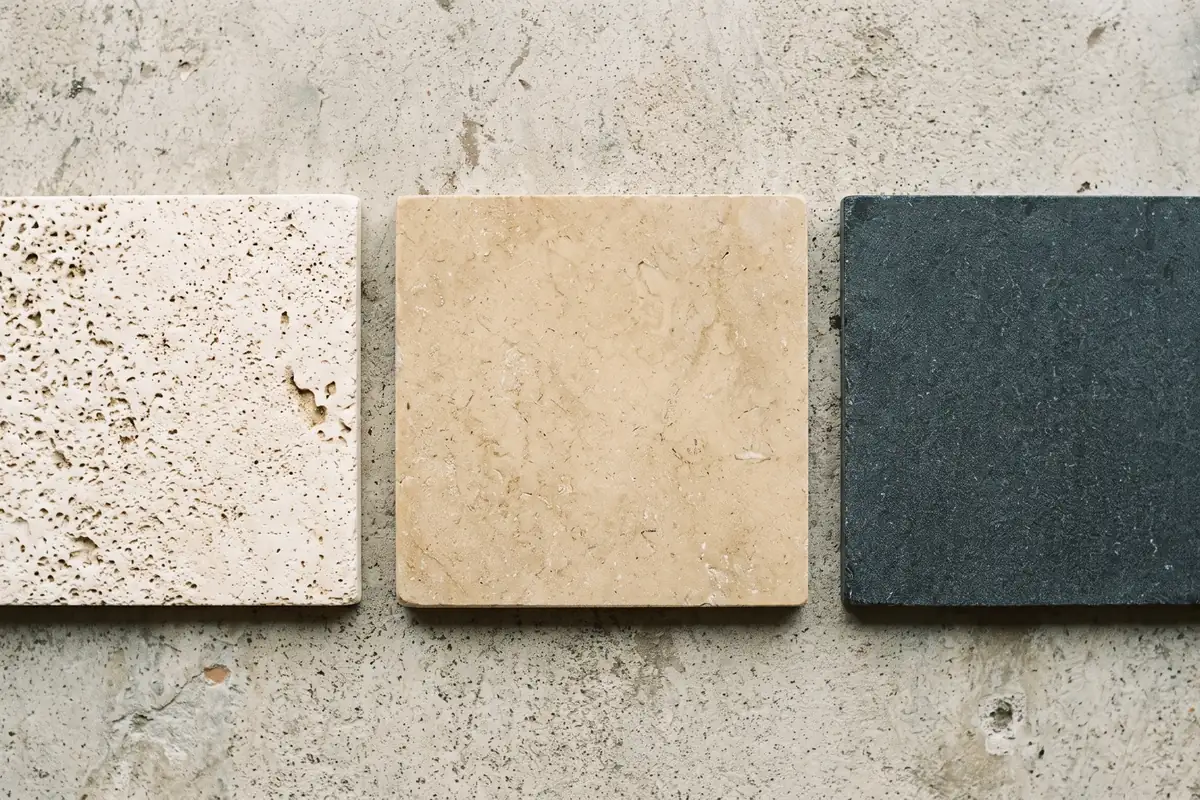
The three main stone types exported from Bali
Paras Stone (volcanic tuff)
Bali’s most iconic stone. Pale cream-white, soft enough to carve in extraordinary detail, used in Balinese temple architecture for a thousand years. Best for: wall panels, architectural carvings, garden sculptures, water features, decorative objects. Not suitable for: high-traffic floors or exposed wet areas without sealing. Quarried in: Gianyar district.
Lavastone (volcanic basalt)
Dense, dark, extremely durable volcanic basalt. The most versatile of Bali’s stones for contemporary architecture. Best for: floor tiles, wall cladding, pool surrounds, outdoor pavers, stepping stones. Handles freeze-thaw well, suitable for northern European climates. Quarried around: Bali’s volcanic geology, processed in multiple areas.
Limestone (sedimentary)
Warm, textured, naturally varied. Popular for its character: the fossil inclusions and colour variation that manufactured tiles can’t replicate. Best for: interior floors, sheltered terraces, pool coping, feature walls. Climate note: high-porosity limestone is not ideal for hard-freeze climates without specific sealing treatment.
Important: natural variation is not a defect
Every stone product from Bali has natural variation in colour, texture, and veining. This is inherent to the material, not a production inconsistency. If you’re expecting the uniformity of a manufactured tile, natural stone isn’t the right product.
What I do to manage this: for large architectural projects where consistency matters, I source from a single quarry batch and document this. For smaller orders where natural variation is acceptable, or desirable, I make sure you understand the range before you commit.
Stone types and their best applications
| Application | Best stone | Notes |
|---|---|---|
| Interior floors | Limestone (honed), Lavastone (honed/brushed) | Lavastone more durable |
| Exterior floors & paths | Lavastone (sandblasted/natural) | Slip-resistant, weather-resistant |
| Pool surrounds | Lavastone, Limestone | Lavastone better for wet areas |
| Wall cladding (interior) | Paras stone, Lavastone | Depends on aesthetic |
| Wall cladding (exterior) | Lavastone | Weather-resistant |
| Garden sculptures | Paras stone | Carves beautifully, weathers well |
| Water features | Paras stone | Traditional for Balinese water features |
| Feature walls | All three | Design-dependent |
Export documentation for stone products
Good news: stone is logistically simpler than timber. Natural stone does not require phytosanitary certification, CITES documentation, or timber certificates. Standard commercial documentation (commercial invoice, packing list, certificate of origin) is sufficient for most destinations.
The main consideration for stone exports is weight. Stone is heavy, and a full container of stone tiles weighs significantly more than furniture. I provide accurate weight estimates before cargo is booked.
Stone and cold climates: what European buyers need to know
This comes up with European clients regularly. Not all Bali stone is suitable for climates with hard freeze-thaw cycles:
- Lavastone: Excellent freeze-thaw resistance due to its density. Best choice for Germany, Netherlands, northern France, Scandinavia.
- Limestone: Porosity varies by quarry. High-porosity limestone can crack in repeated freeze-thaw. Needs testing and specific sealing for cold climates.
- Paras stone: Soft and absorbent, not recommended for climates with regular hard frost.
I advise on suitability for your specific climate before any stone order is confirmed.
Get the printable stone reference guide
All seven stone types compared on one sheet: properties, applications, and indicative prices. Enter your email and I’ll send it over.
Frequently asked questions
How do I order stone samples before committing to a large order?
I strongly recommend samples for all stone orders. I can arrange sample sets documented with photos, or for significant project orders, small physical samples shipped directly to you. It adds time but prevents expensive surprises.
Can you source mixed stone types in one container?
Yes, mixed stone orders are common. Paras carvings, lavastone tiles, and limestone pavers can all be coordinated from different suppliers and consolidated into one container. I manage the documentation for the combined shipment.
Is the paras stone I see on Bali villas the same as what I’d receive?
Yes, assuming you’re specifying the same grade and quarry batch. Paras stone on Bali villas and temples has often been there for years. The patina and character you see is the weathered version of the fresh stone. Fresh paras is lighter; it darkens and develops character with time and weather.
Source natural stone from Bali
Tell me what type, application, quantities, and destination. I’ll find the right quarry or workshop.