Paras Stone from Bali
The stone that defined Balinese architecture for a thousand years
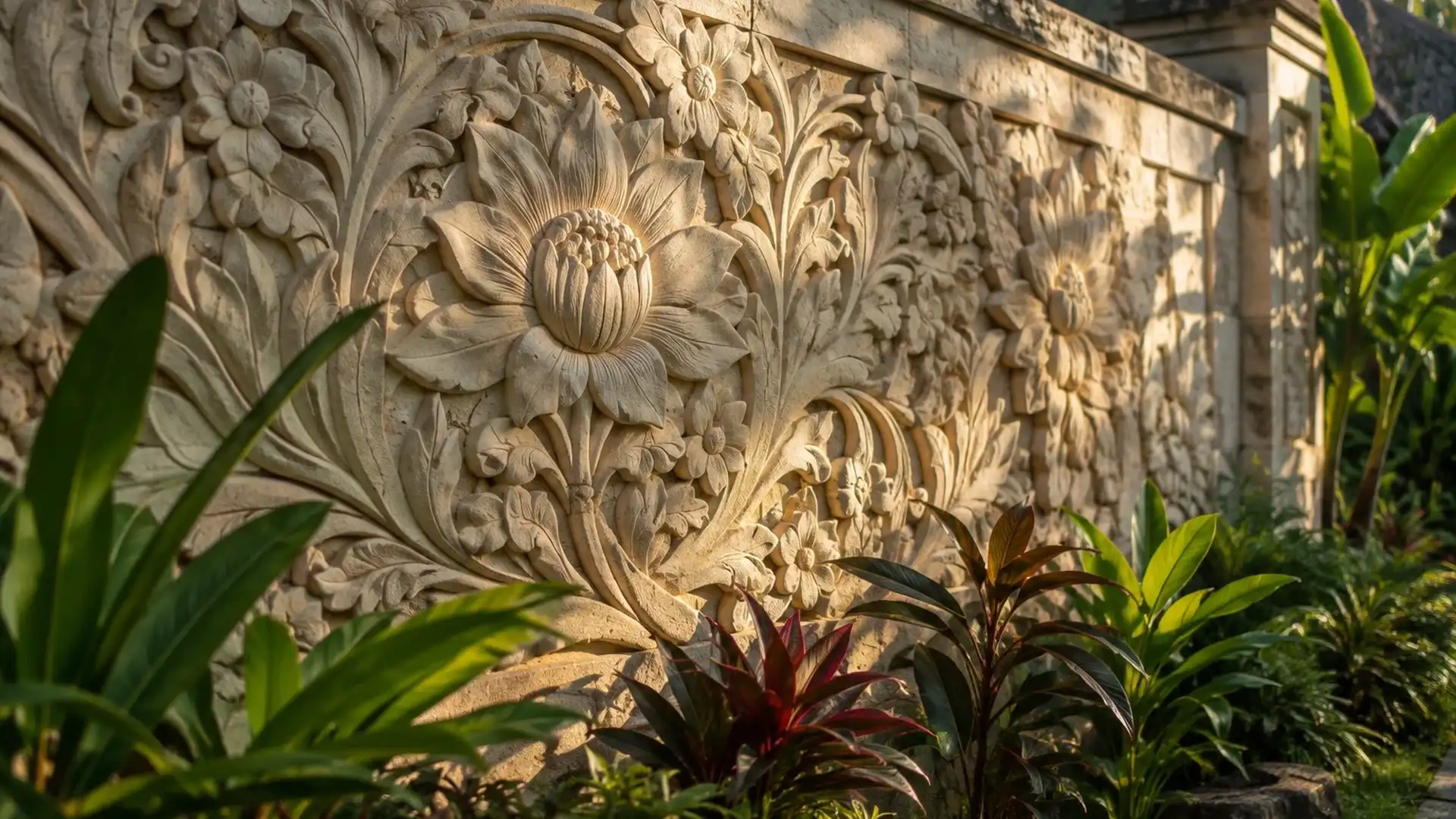
Walk into any Balinese temple and you’ll see paras stone. It’s the pale, soft, cream-white volcanic tuff that Balinese stone carvers have worked with for centuries. It carves like no other material, allowing extraordinary detail, and weathers beautifully outdoors, developing a soft patina that makes aged pieces look even better than new ones. For architecture and garden design projects in Europe, Australia, and the Americas, paras stone has become increasingly sought after.
Home › Natural Stone › Paras Stone
What I source in paras stone
- Wall panels: flat, carved, and textured finishes
- Architectural elements: doorframes, columns, cornices
- Garden sculptures, traditional Balinese figures and contemporary abstract pieces
- Water features: fountains, basins, spouts
- Decorative objects: bowls, planters, candle holders
Finished sculptural pieces for terraces and gardens also sit under garden decor. For a comparison of all the Bali stones and what each one suits, read the natural stone guide.
Get the printable stone reference guide
All seven stone types compared on one sheet: properties, applications, and indicative prices. Enter your email and I’ll send it over.
Things to know about paras stone
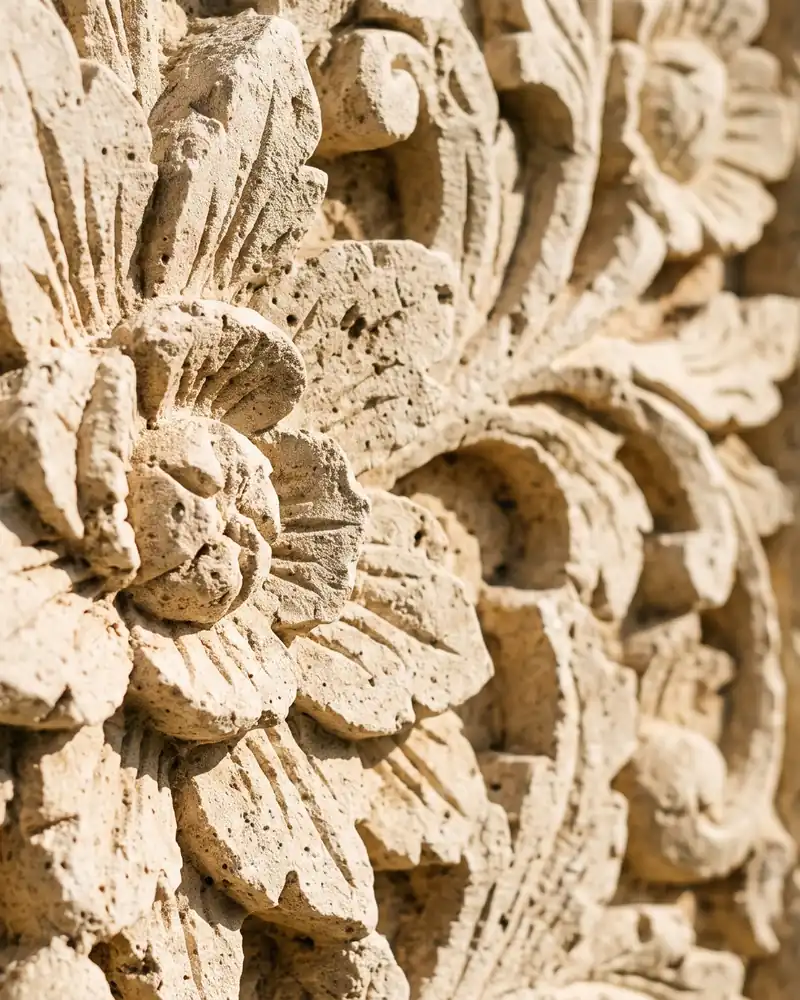
It’s soft, which is a feature and a consideration
Paras stone is relatively soft volcanic tuff. It carves beautifully because of this. But it’s not suitable for high-traffic flooring or areas subject to heavy rain impact without a sealant. For covered walls, garden features, and decorative applications, it’s excellent. Where you need hard-wearing stone underfoot, limestone from Bali is the better choice.
Colour variation is natural
Paras ranges from cream-white to light grey. Pieces from the same quarry batch will be consistent. Across different batches, there can be variation. For large installations, I source from a single batch where possible and document this.
It is not sandstone
Paras stone is a distinct volcanic tuff specific to Bali. It is not a sedimentary sandstone, even though it is often sold internationally as “Bali sandstone”. The name matters because the two behave differently in wet and cold climates. If a listing says sandstone, ask which stone it actually is.
Frequently asked questions
Can paras stone be used outdoors?
Yes, it’s used extensively in outdoor applications throughout Bali. In damp or cold climates, a penetrating stone sealer is recommended to reduce water absorption and surface staining. I’ll advise on the right sealant for your climate.
Is it heavy to ship?
Stone is heavy by definition. I’ll give you a realistic weight estimate and shipping cost for your specific order before you commit. Paras stone is lighter than lavastone or limestone, but it still adds up.
Can you source carved paras stone to a custom design?
Yes. Bali’s paras stone carvers are highly skilled and work to specification. Custom pieces require clear drawings or references and realistic production timelines. I’ll manage this communication in Bahasa with the carver.
Do you work with designers on specified projects?
Yes. See how I work with interior designers sourcing specific materials and finishes for a project.
Source paras stone from Bali
Tell me the application, quantities, and any design specifications. I’ll find the right carver or workshop.