Natural Stone from Bali
Volcanic geology. Centuries of stone carving tradition. Nowhere else quite like it.
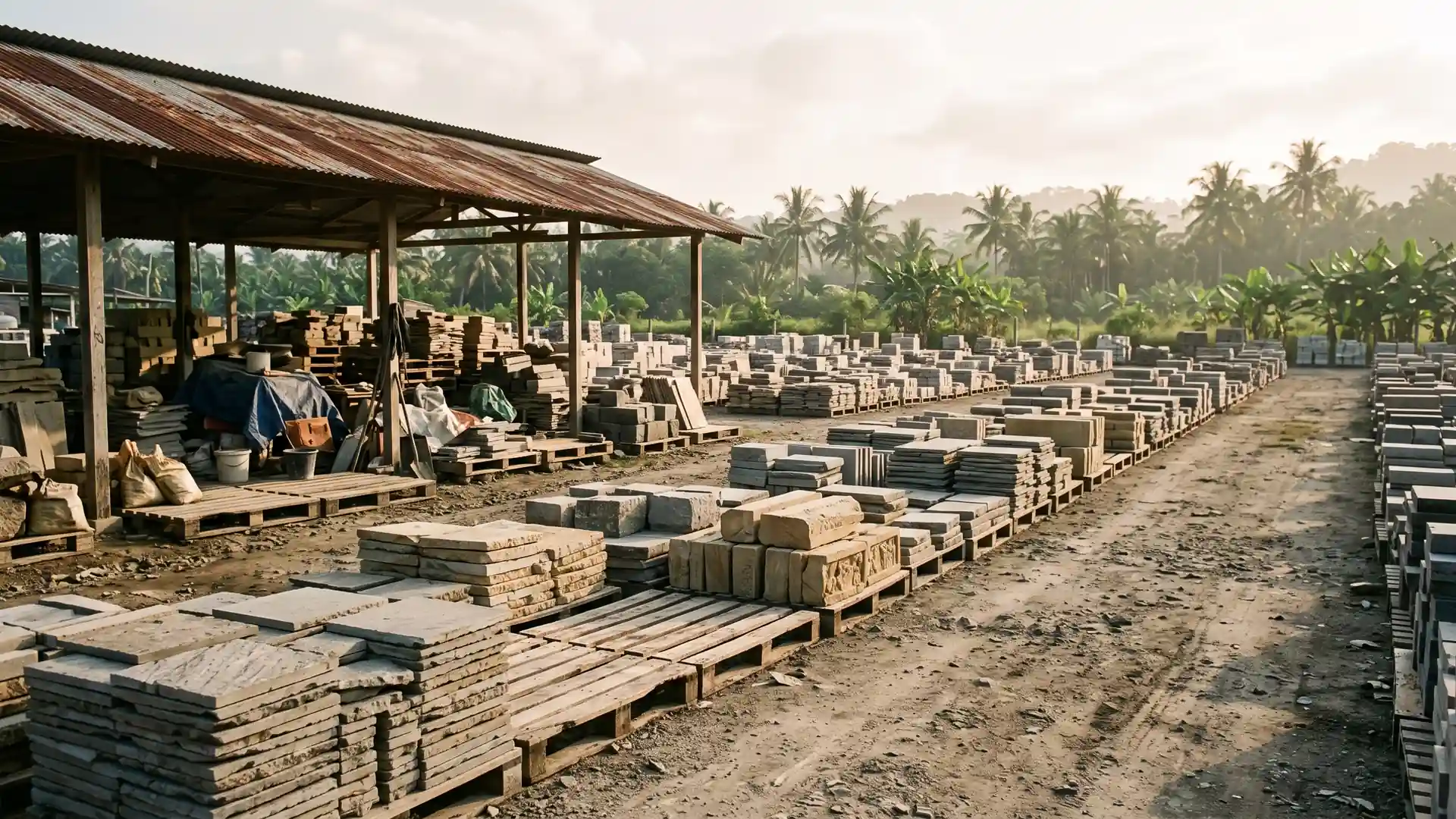
Bali sits on volcanic geology that produces some of the world’s most distinctive natural stone. Paras stone, lavastone (basalt), and limestone: each with its own character, each used differently, each with a long tradition of craftsmanship behind it. The stone industry here is concentrated around Gianyar, Tegallalang, and the slopes of Gunung Agung. Finding the right quarry or workshop for your specification takes local knowledge and supplier relationships built over years.
Home › Natural Stone
Stone categories I source
Paras Stone
Bali’s iconic pale volcanic tuff. Used for carvings, wall panels, and architectural features. Defined Balinese temple architecture for a thousand years.
See paras stone →Lavastone
Dense, dark volcanic basalt. Extremely durable, and ideal for flooring, wall cladding, and exterior architecture. A favourite for contemporary design worldwide.
See lavastone →Limestone
Warm, textured, naturally imperfect in all the right ways. Tiles, flooring, pool coping, and architectural elements. Popular in European and Australian projects.
See limestone →Not sure which one your project needs? Read the natural stone guide, which compares all three by climate, application and finish.
Also from Bali: stone and copper bathtubs
Separate from the three stone types above: finished bathtubs and basins in river stone, marble, onyx, fossil stone, terrazzo and copper. These are bathroom centrepieces, not a raw material type, which is why they sit apart here rather than as a fourth stone category.
Stone & Copper Bathtubs
Bathroom centrepieces, checked and photographed before they ship.
See bathtubs & basins →Get the printable stone reference guide
All seven stone types compared on one sheet: properties, applications, and indicative prices. Enter your email and I’ll send it over.
Important: natural stone variation
Every stone product from Bali has natural variation in colour, texture, and veining. This is not a defect, it’s the character of the material. I set expectations clearly with every client, and I photograph the actual stone you’ll receive before it ships, as part of quality control before shipping.
For large architectural projects where consistency matters, I source from a single quarry batch and document this. Where natural variation is acceptable, or wanted, I make sure you know what to expect before you order. Most of this work is for hotel and villa projects.
Stone and shipping, a practical note
Stone is heavy. That is not a problem, it just affects your freight calculation significantly. A container of stone weighs substantially more than a container of furniture.
I’ll give you a realistic weight estimate for your order, which feeds into the shipping cost calculation. Stone usually ships as FCL (full container load) because LCL (shared container) rates become inefficient at this weight. I manage this process and coordinate with my cargo partner. See shipping and logistics from Bali for how the quote is put together.
Ask about stone sourcing from Bali
Tell me what type of stone, the application, quantities, and destination. I’ll give you an honest picture.